Introduction
Search Engine Optimization (SEO) is one of the most effective digital marketing strategies for businesses looking to grow organically. Unlike paid advertising, SEO focuses on building a strong foundation that delivers long-term visibility, consistent traffic, and quality leads.
In this blog, we break down the complete SEO process and explain how each step contributes to measurable business growth.
The SEO Process Explained
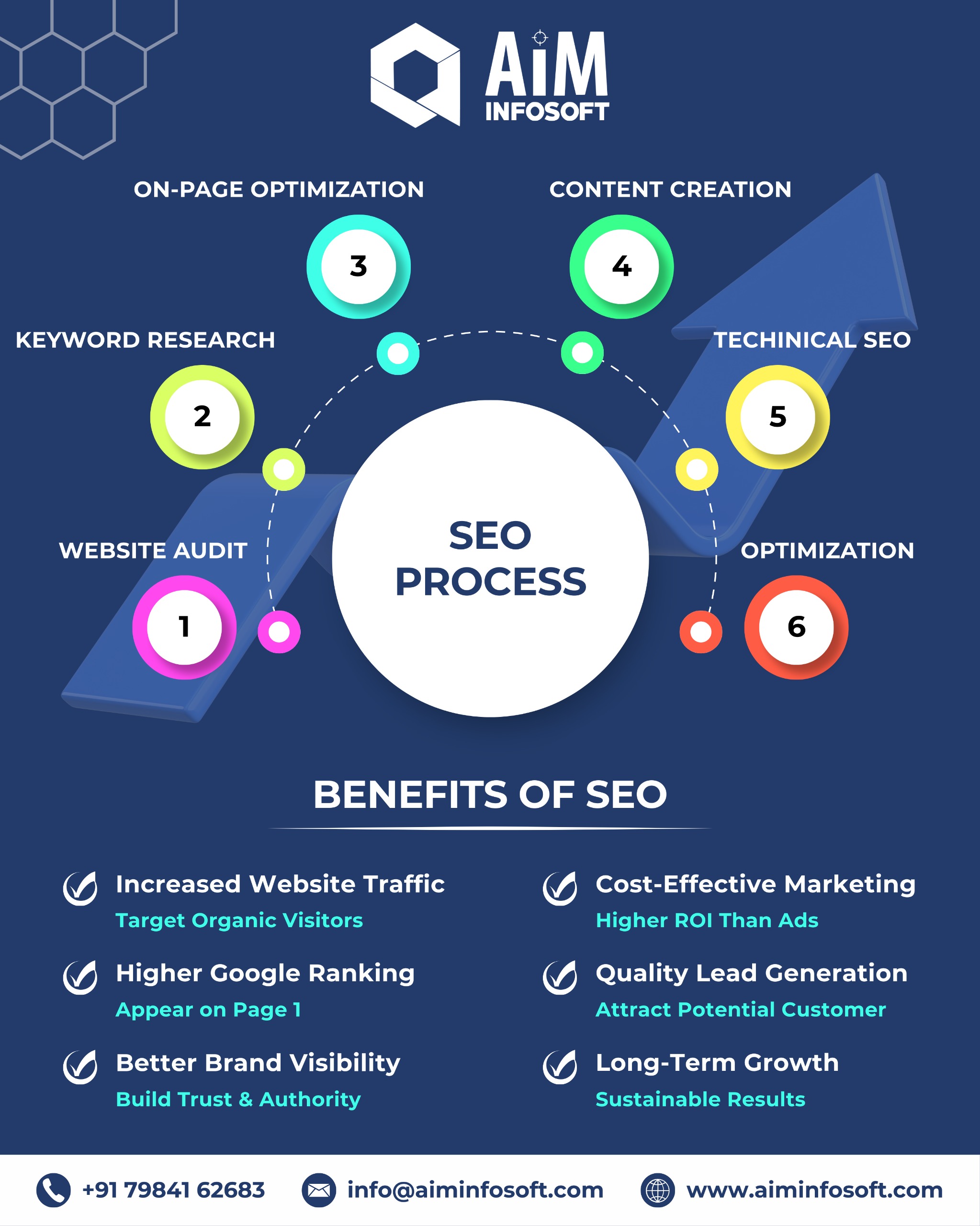
1. Website Audit
A website audit is the starting point of any successful SEO strategy. It helps identify technical issues, performance gaps, and content weaknesses that may affect search engine rankings.
Key areas reviewed during an audit include:
Website speed and performance
Mobile responsiveness
Crawlability and indexing
Existing content quality
2. Keyword Research
Keyword research helps identify what your target audience is searching for. By focusing on relevant, high-intent keywords, businesses can attract users who are actively looking for their products or services.
This step ensures:
Better search intent targeting
Improved content relevance
Higher chances of ranking on Google
3. On-Page Optimization
On-page SEO focuses on optimizing individual pages to improve their visibility in search results.
This includes:
Optimizing page titles and meta descriptions
Improving heading structure (H1, H2, H3)
Internal linking
Content optimization for keywords
4. Content Creation
High-quality content is the backbone of SEO. Search engines reward websites that provide value-driven, informative, and original content.
Effective SEO content:
Answers user questions
Builds authority and trust
Improves engagement and dwell time
5. Technical SEO
Technical SEO ensures that search engines can easily crawl, index, and understand your website.
Key technical SEO elements include:
Site speed optimization
Secure HTTPS setup
Structured data implementation
Fixing broken links and errors
6. Continuous Optimization
SEO is not a one-time activity. Continuous optimization is required to adapt to algorithm updates, competition, and user behavior changes.
This phase focuses on:
Monitoring keyword rankings
Improving underperforming pages
Enhancing user experience
Benefits of SEO for Businesses
Increased Website Traffic
SEO helps attract organic visitors who are genuinely interested in your offerings, resulting in consistent and high-quality traffic.
Higher Google Rankings
Appearing on the first page of Google increases visibility, credibility, and click-through rates.
Better Brand Visibility
A strong SEO presence builds brand trust and positions your business as an authority in your industry.
Cost-Effective Marketing
Compared to paid advertising, SEO delivers higher ROI over time with sustainable results.
Quality Lead Generation
SEO attracts users with intent, leading to better conversion rates and qualified leads.
Long-Term Growth
With consistent optimization, SEO delivers long-lasting results that support business growth over time.
Conclusion
A well-structured SEO process is essential for businesses aiming for long-term digital success. By combining technical expertise, strategic content, and continuous optimization, SEO becomes a powerful growth engine.
At Aim Infosoft, we help businesses implement result-driven SEO strategies tailored to their goals and industry needs.
Want to improve your search visibility and organic growth? Get in touch with our SEO experts today